
Untitled (Refrigerated Trolley), acrylic on canvas on board, 30 x 42 cm (private collection)
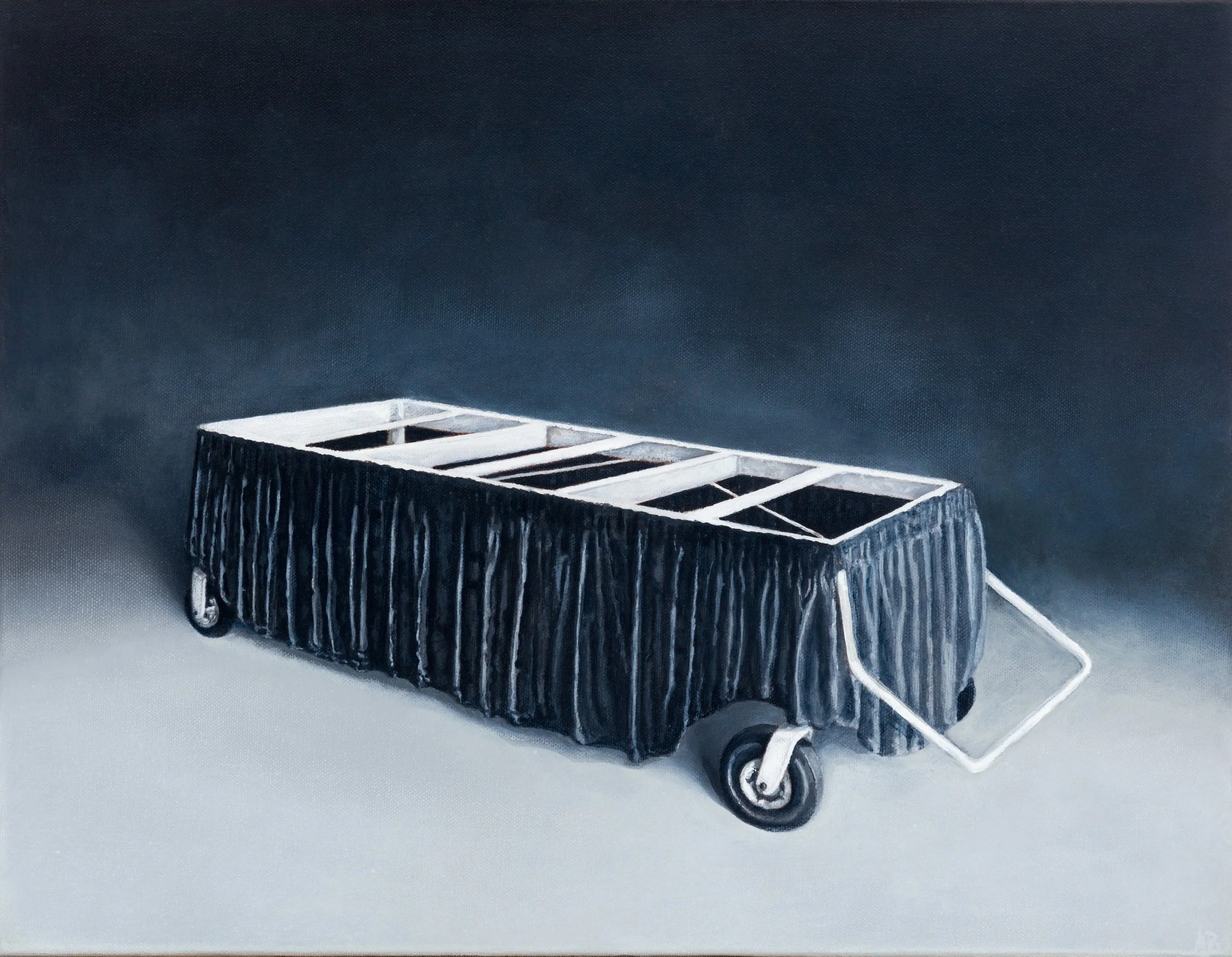
Untitled (Spooky Trolley), oil on canvas, 36 x 46 cm (private collection)
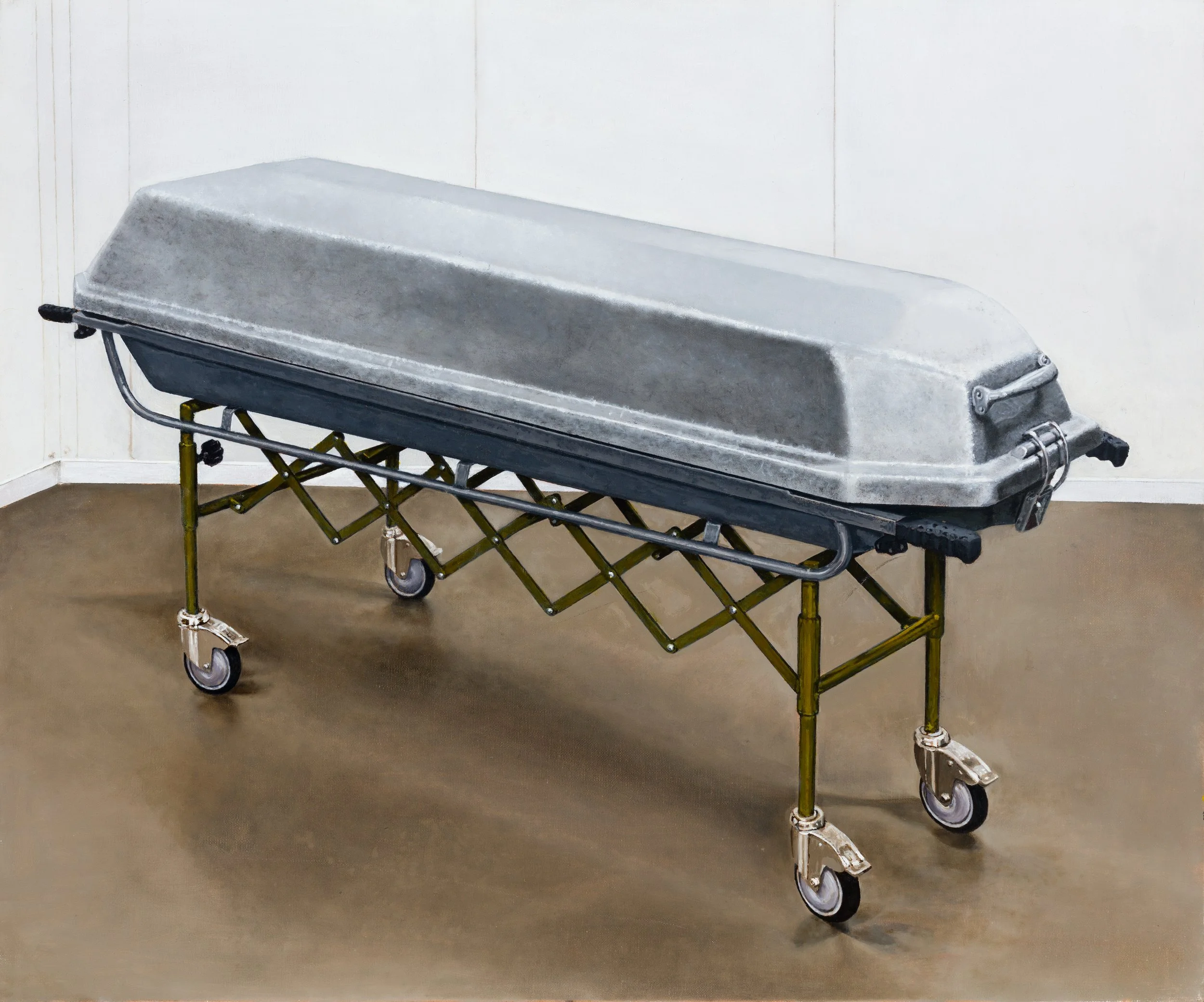
Untitled (Silver Trolley), oil on linen, 50 x 60 cm (private collection)
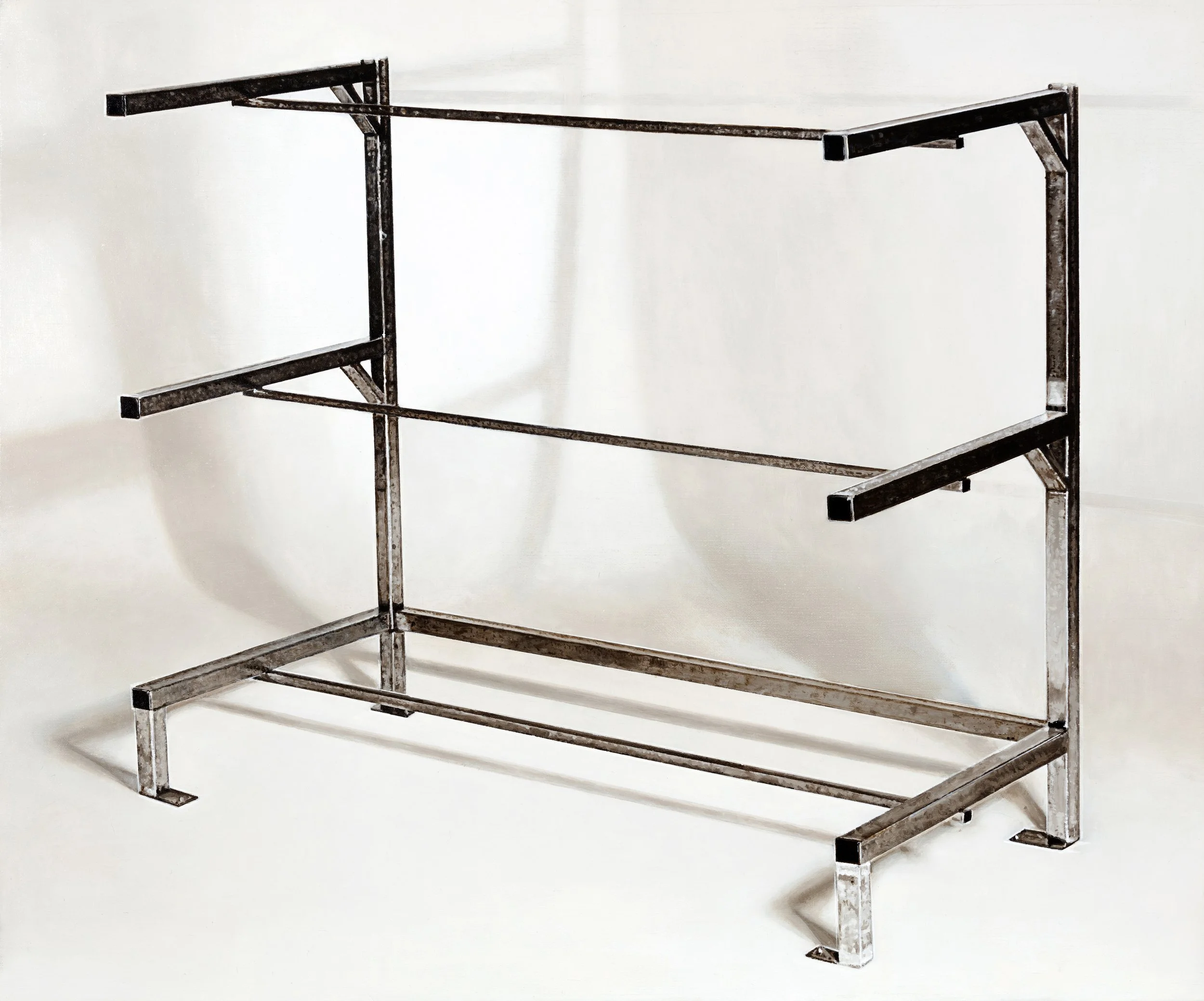
Untitled, oil on linen, 50 x 60 cm (private collection)
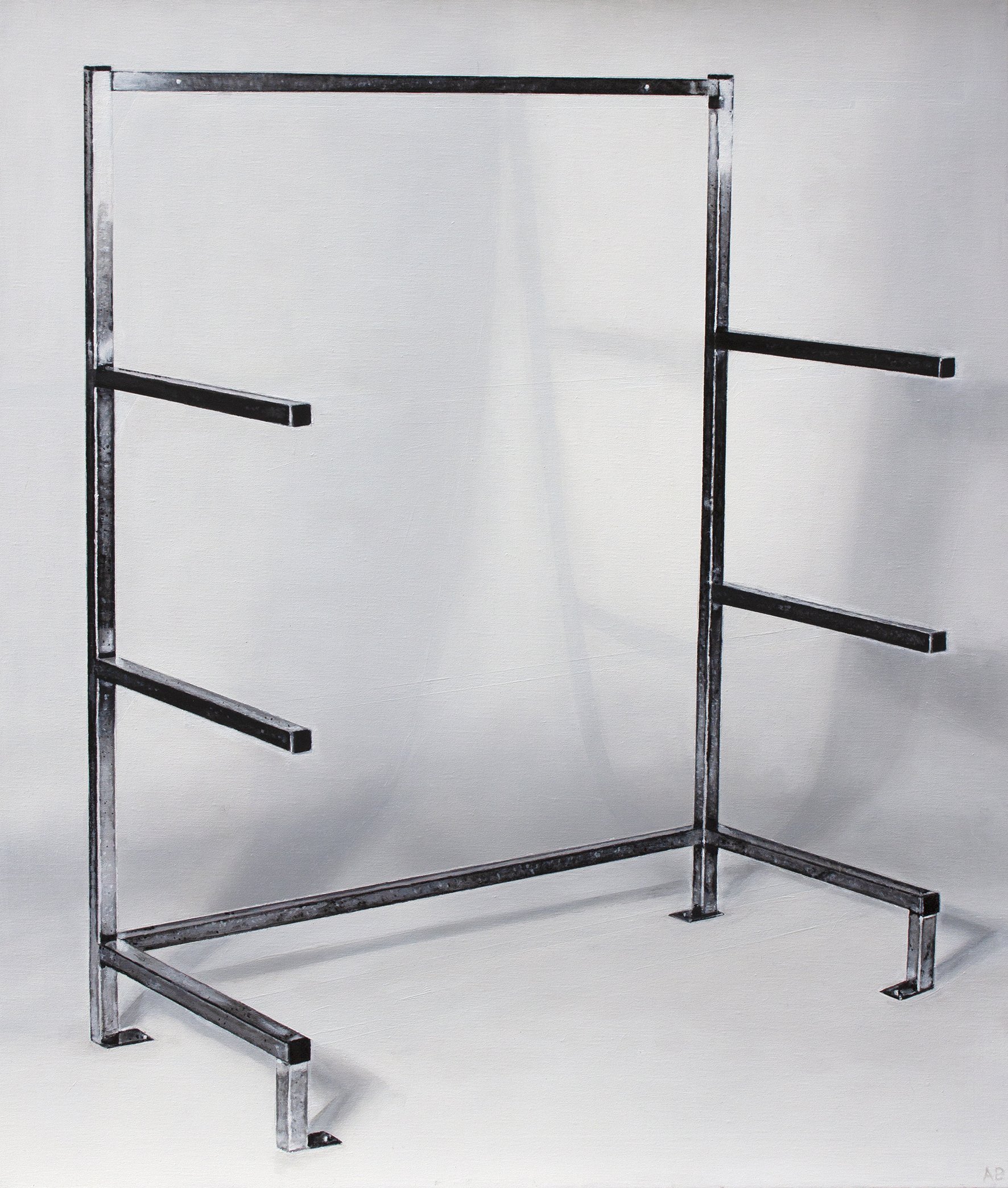
Untitled, oil on linen, 60 x 70 cm
Aftercare
Drawing on found images connected to the mortuary industry, these small-scale paintings approach death through the language of commerce, care, and display. Sensitively rendered yet quietly unnerving, they hold a dissonant tension: forensic but painterly, anonymous but marked by the residue of private loss. Their intimacy asks the viewer to come close, while their subject matter resists comfort.
Each object is isolated against a studio backdrop, removed from its original context and presented with a stark, almost transactional clarity. What emerges is not death as drama, ritual, or transcendence, but death as object, service, image, and managed event. In this sense, the works speak to a contemporary western culture in which mortality is increasingly outsourced, privatised, aestheticised, and made difficult to look at directly.
The paintings also touch on the loneliness produced by neoliberal individualism: a social order that insists on self-sufficiency while leaving dependency, grief, ageing, and bodily vulnerability largely unacknowledged. These objects become signs of separation and precariousness, but also of the systems that shape how loss is administered, concealed, and consumed.
By setting these objects up as if they are waiting to address us, the paintings quietly implicate the viewer. They refer to art-making not as escape, but as a form of confrontation: a way of looking at what a culture would rather keep at the edge of vision. Rather than offering resolution, the works hold open the uneasy space between presence and absence, intimacy and industry, private grief and public systems of care.